Structured cabling for an office: what it is, what it includes and why it is worth it
Organized structured cabling reduces faults, speeds up maintenance and makes expansion easier. The components, how it is designed and tested, and mistakes to avoid.
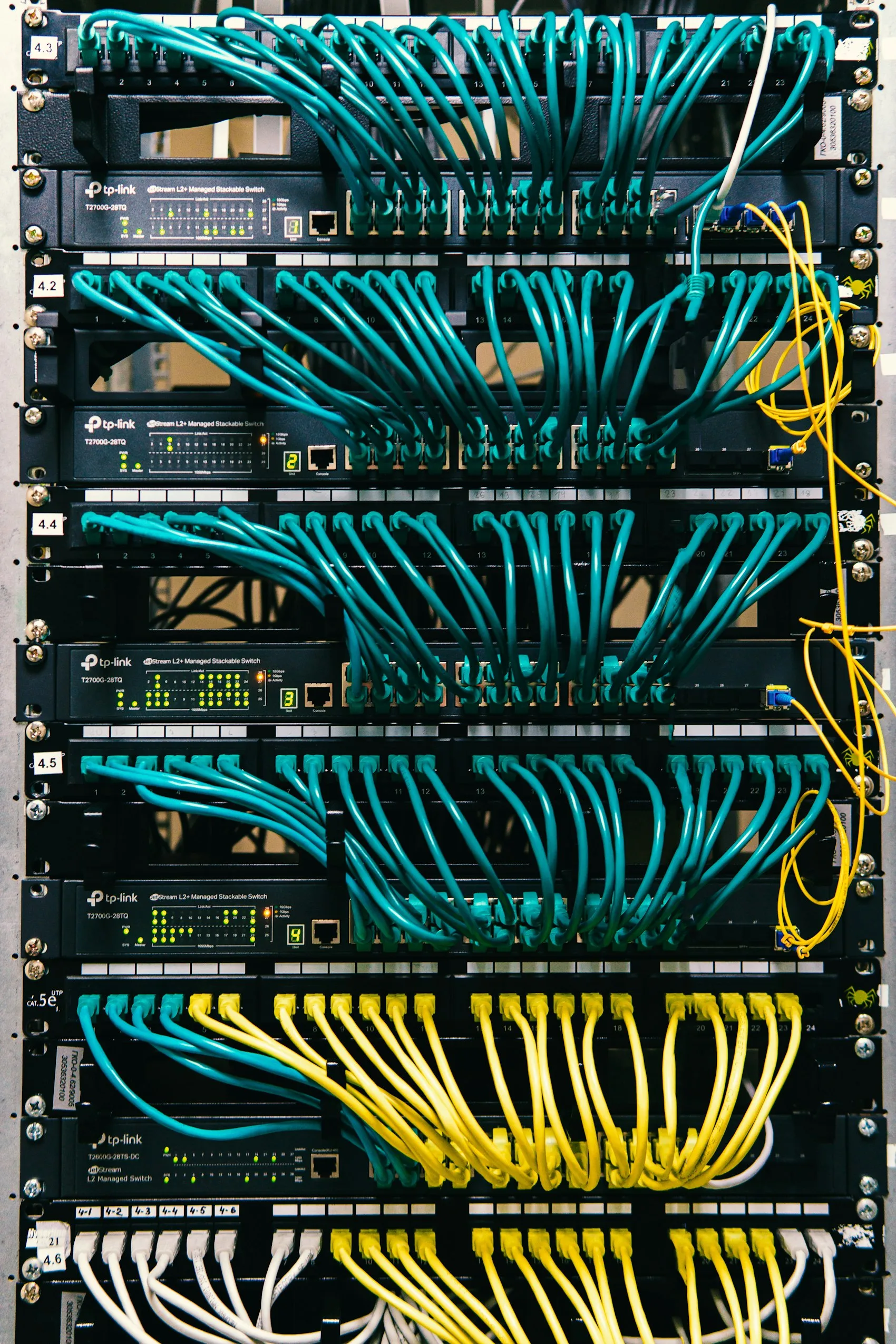
When everything works, nobody thinks about the cabling. The moment something stops, though, the difference between an organized and a chaotic installation shows up immediately: one team finds and fixes the problem in minutes, another spends hours digging through bundles of unlabeled cables. That’s exactly why structured cabling is the foundation worth getting right from the start.
In this article we explain what structured cabling is, what components it consists of, how it’s designed, installed and tested, and the typical mistakes that come with improvised networks. The goal is for you to know what to expect before starting a project for a new office, or before bringing an existing setup into order.
What structured cabling is
Structured cabling is a single, standardized cabling system that serves data, telephony, video surveillance and access control in one common, organized infrastructure. Instead of mismatched cables run “as needed” for each new device, structured cabling follows an upfront design and widely accepted standards for building telecommunications networks.
The idea is to treat the whole building or office as a system with clearly separated parts, rather than a collection of individual connections. In practice the infrastructure is organized into several logical levels:
- Work areas: the outlets by the desks, where the user plugs into the network.
- Horizontal cabling: the cables from the work areas to the floor’s communications cabinet.
- Vertical (backbone) cabling: the links between cabinets on different floors and the central equipment room.
- Central equipment: where all the lines come together and connect to the switches, router and internet provider.
This separation makes the network predictable. Everyone knows where a given line runs, where it ends, and how it’s patched, without having to guess.
What a good structured cabling system consists of
A quality structured cabling system isn’t just cable. It’s a collection of elements that work together:
- Copper cable runs (for example Cat6 or Cat6A), laid along pre-planned routes.
- Cable trunking and conduit, which protect the cables and keep everything tidy.
- Outlets at the work areas with the right number of ports.
- Patch panels in the communications cabinet, where all the lines terminate.
- A communications cabinet or rack with organizers that keep patch cords tidy.
- Power and cooling for the equipment, along with room for future expansion.
- Labeling and documentation for every line and port.
The patch panel deserves special mention. It’s the element that turns a pile of cables into a manageable system. Instead of long cables plugging directly into the switch’s expensive ports, all the lines terminate at the panel, and connections are made with short patch cords. That protects the equipment’s ports from wear, and makes any change to the network fast and clean.
Cat6 or Cat6A: which copper category to choose
With copper networks, the category you choose determines the speed and how many years the installation will serve you.
- Cat6 is a sound choice for offices running mainly at 1 Gbps. It covers the needs of most standard work areas today.
- Cat6A supports 10 Gbps over the full permitted line length and runs at a higher frequency. It’s the right pick if you’re planning a 10-gigabit network to the desks, powering more devices over PoE, or want the installation to last a long time without rework.
A practical rule of thumb: if you’re fitting out a new office you’ll be working in for years, the higher category often pays for itself, because the cable is the hardest part of the network to replace. The cable itself is a relatively small part of the overall project, while the installation’s working life is measured in years.
For longer distances or links between buildings, copper has limits and fiber is often the better fit. We compare the two approaches in Fiber vs copper network, if you’re not sure which suits your case.
How it is designed and built
A good installation starts on paper, not with a drill. The typical process runs through several stages.
Design and survey
We map out the building layout, the number of work areas and the needs per room, then draw the routes and points. At this stage key decisions get made: where the communications cabinet will sit, how the trunking will run, and how many spare lines to allow for.
Installation and termination
Cables are run along the designed routes and terminated at the patch panels and the outlets at the work areas. Permitted lengths and bend radii are respected, so the signal doesn’t suffer.
Labeling and documentation
Every line is labeled at both ends and recorded in documentation (a diagram and a port schedule). This is the invisible part that saves the most time later. When every line is named, finding a fault takes minutes.
Testing and certification
Finished lines are measured with a dedicated tester that checks key parameters: attenuation, crosstalk, length and compliance with the standard for the relevant category. Results are logged and handed over as a test report. That’s the difference between “looks like it works” and proven to work to standard.
Why organized structured cabling is worth it
Fewer faults
Well-installed, certified lines are more reliable and less prone to random faults. An organized installation simply has fewer places for things to go wrong.
Faster maintenance
When every line is labeled and documented, diagnosis is a matter of minutes. There’s no need to physically trace which cable goes where, or disconnect things at random.
Easy expansion and scaling
A well-designed structured cabling system leaves spare capacity: free ports on the patch panel, room in the cabinet, and planned routes. When the team grows or new devices are added, expansion is clean and fast, without disrupting everyone else’s work.
Protecting the investment
An organized structure extends the life of the equipment and of the network itself. Certified lines often come with a quality guarantee on the installation, and the documentation remains an asset that helps every future technician.
Typical mistakes in improvised networks
When a network grows piecemeal, without a design, the same problems tend to show up sooner or later:
- Unlabeled cables, which turn every change into an investigation.
- Cables plugged straight into the switch, with no patch panel, wearing out the ports and making the cabinet unmanageable.
- Mixed categories and quality, where the weakest line determines how the whole network behaves.
- Excessive lengths or poor bending, which degrades the signal without it being obvious from the outside.
- Zero documentation, so knowledge of the network lives only in one person’s head.
- No spare capacity, so every new work area requires a new improvised cable.
Individually these small compromises look harmless. Over time, though, they turn the communications cabinet into a tangle where even an experienced technician loses time.
Ready to get your network in order?
Structured cabling isn’t a luxury, it’s the foundation everything else stands on: internet, telephony, cameras and access control. Done properly once, it works quietly for years and saves you headaches with every change.
If you’re planning a new office or want to bring an existing network into order, take a look at our Structured cabling service. And when you’re ready for concrete next steps, request a free site visit and we’ll propose a solution matched to your space and growth plans.
Related service
Structured cabling